A Pattern Language:
Studies in Line, Pattern and Colour
Pattern (noun) A repeated decorative design.
In psychology, “pattern” can refer to several interconnected concepts, including how
individuals compulsively respond to stimuli, the recurring characteristics of their
thoughts, feelings, and behaviours and the way information is processed and understood.
It also encompasses the study of how humans recognise and categorise information based on occurring patterns.
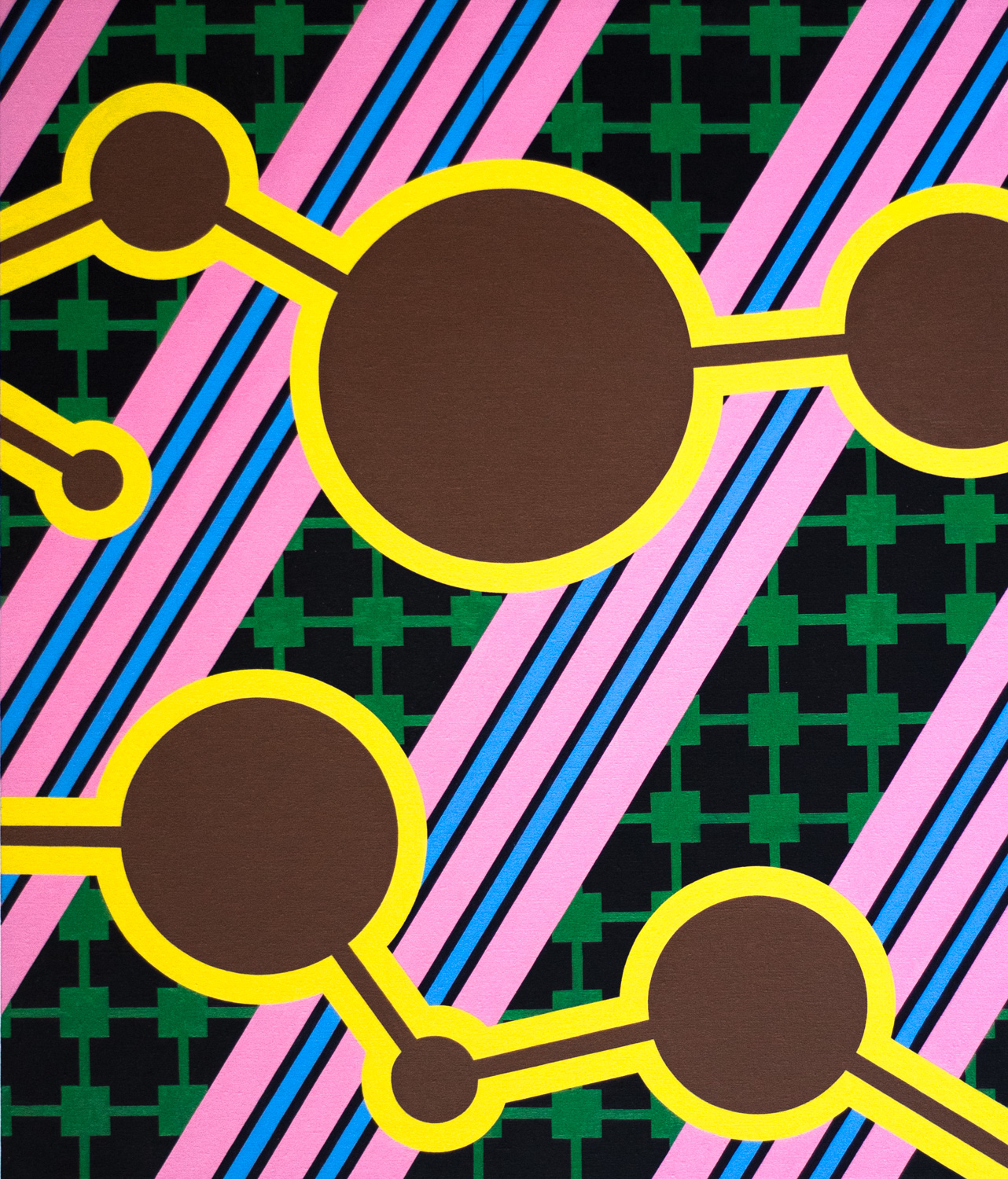
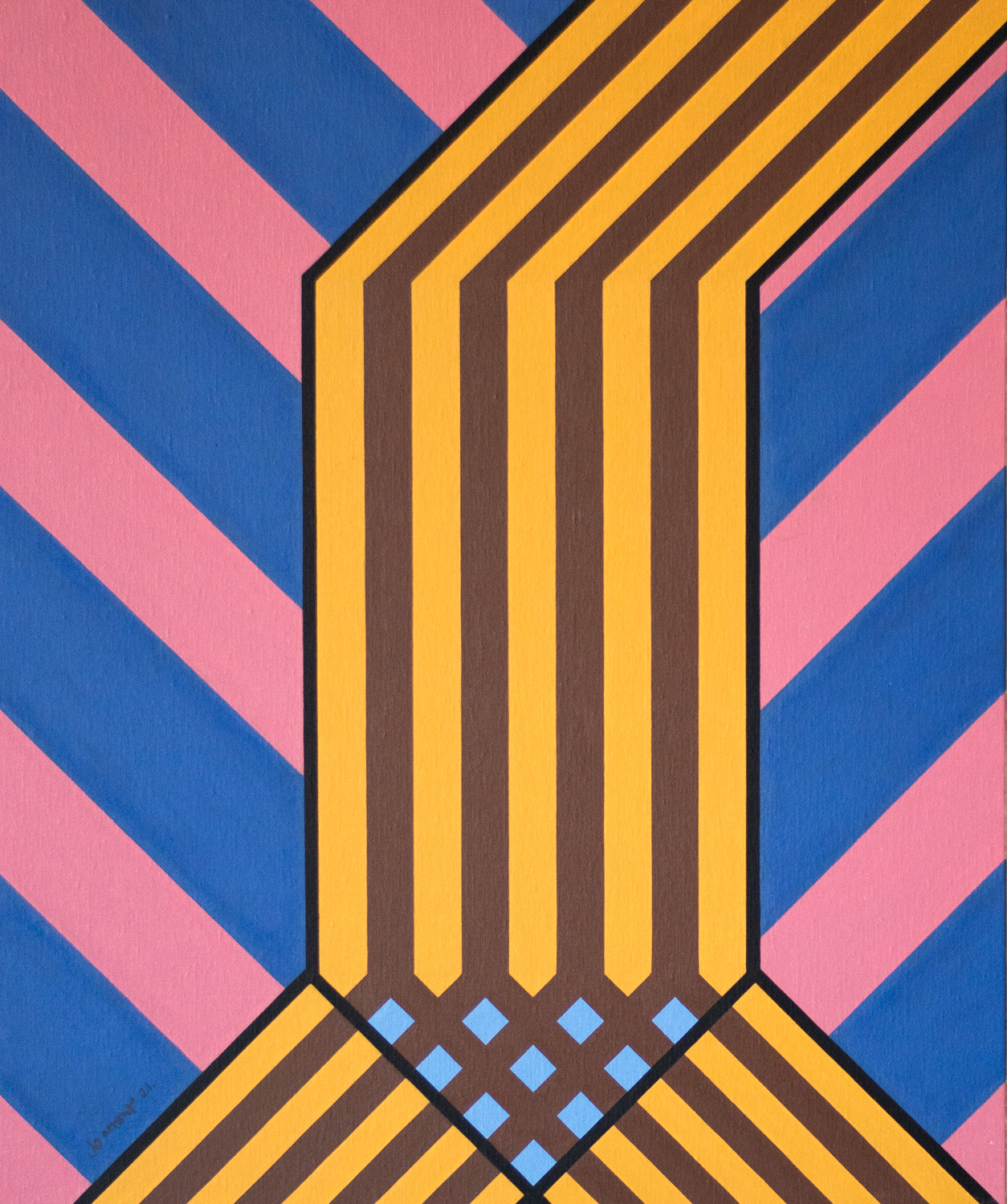
These paintings are abstract representations of the social and political phenomena which interest me both on an
intellectual level as well as how that plays out on the canvas. The colours, lines and geometric patterns all form
part of my visual language and this can be seen in other series.
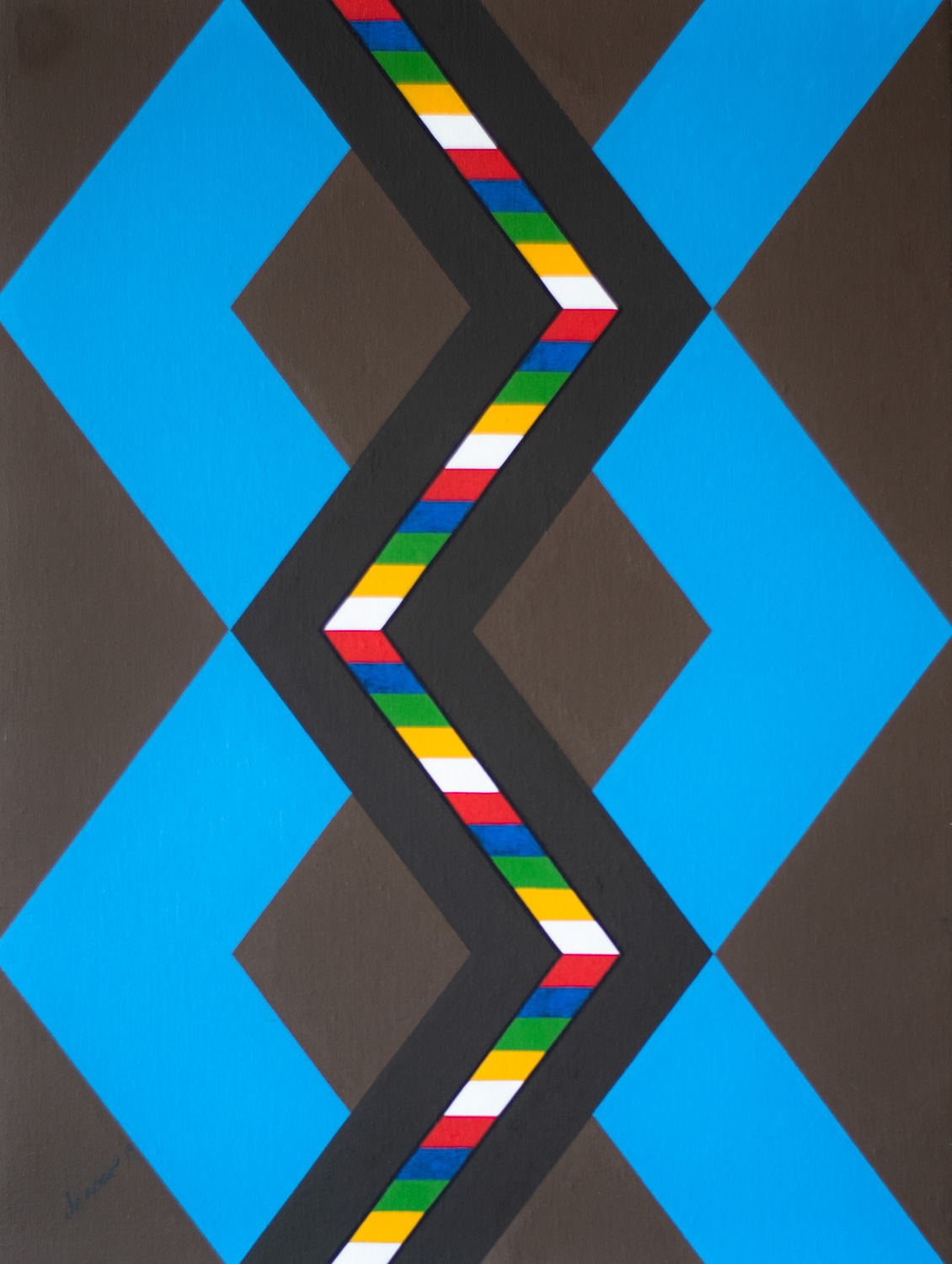

Opposing Forces 2019
47 X 62 cm
oil on canvas
The painting “Opposing Forces” (2019) shows the South African flag’s colours in the centre zig zag band.
The zig zags of the foreground and background appear to be going in opposite directions. The background zig zag pattern is the same width, height and direction as the foreground zig zag pattern except that it is not synchronised.
If it were to move a notch up the zig zags would integrate. This is a commentary, in abstract, on the South African political dynamic.
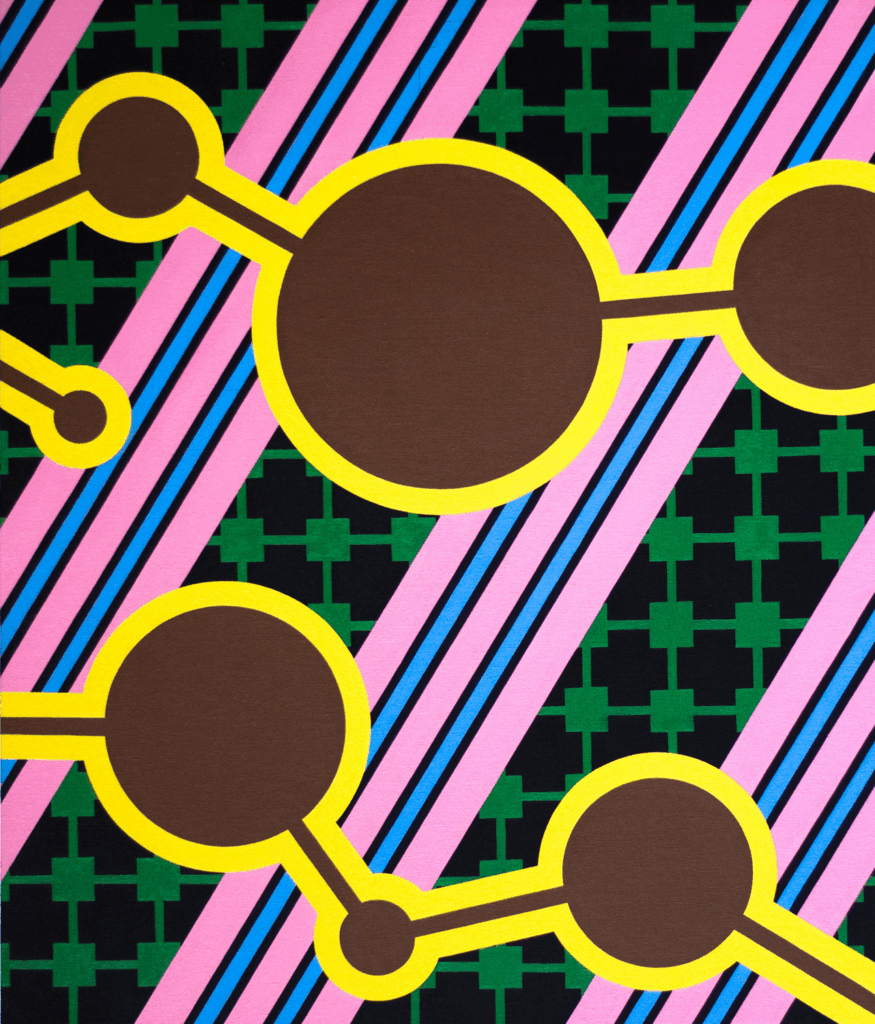
Seven Circles 2021
62 X 52 cm
oil on canvas
Eikon is illustrating themes that centre on the ideas of truth, new technologies, global warming, the American pivot to the East, global justice, extreme political movements, nuclear war and food security (“Fiat Panis”).
These are positioned in a setting with a “humanoid” who is being sacrificed on a crucifix. The humanoid is unlike the Christ figure on the cross for it is unshackled and free and alive and is not sacrificing itself but rather the planet as it is hopeless to discover remedies for the problems it produces.
The humanoid is a reference to the past and humanity’s preoccupation with religious iconography but it also leapfrogs this iconographical reference into an unknown present or future- so that it takes the concept of sacrifice and who is being martyred now takes on a new meaning.
The highly intelligent raven on the opposite side of the cross (to the semi conductor) is both an ominous or transformational symbol in western art.
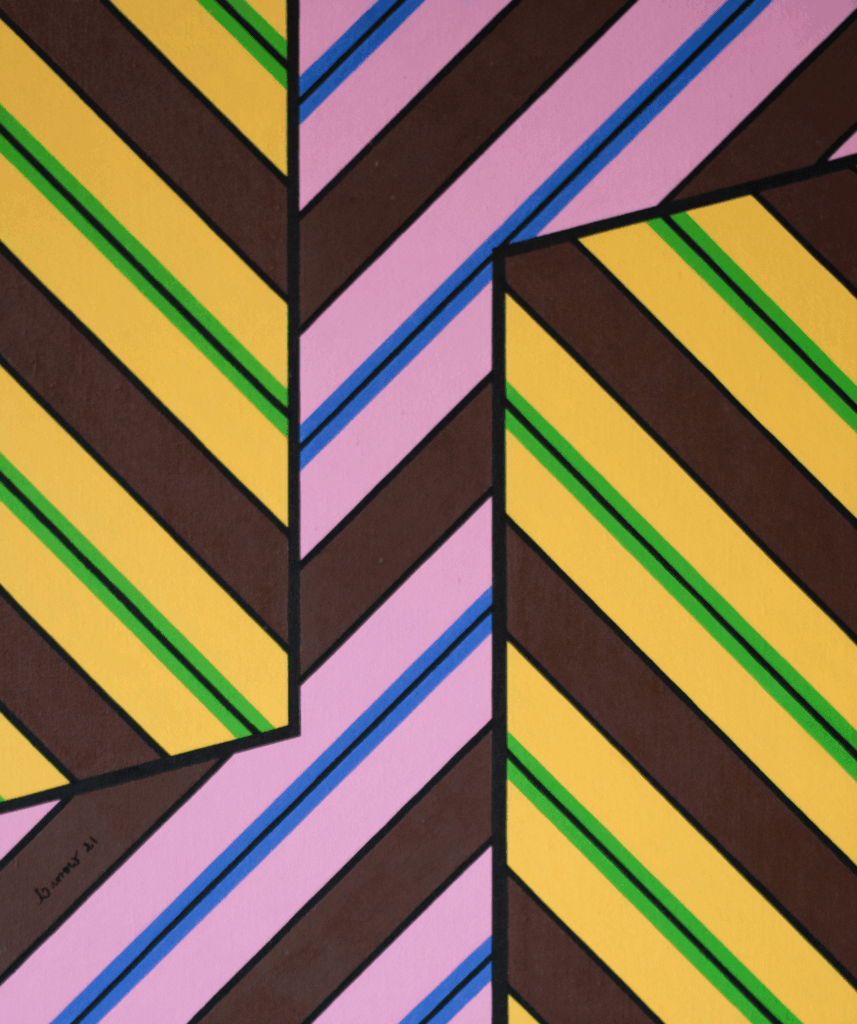
In Front Behind 2021
45 X 54 cm
oil on canvas
The Kitchen continues on this journey of Space-Time but brings these grand themes closer to home, into my kitchen be exact.
In the painting “The Kitchen”(2024) there is an explosion on the splash-back of the kitchen wall. This interior portrait scene portrays the idea that we experience consciously and /or unconsciously threats to human civilisation in all the spaces we inhabit.
The Kitchen is a symbol of human civilisation in that culture progresses alongside the gastronomical practices of cultures all around the world. In “The Kitchen” I also portray a “jack-in-the-box”: illustrative of difficult and surprising events which always inject their disruptive contents in unpredictable, sometimes capricious ways.
See other details in “The kitchen”: drugs (lines on tray), Homo Naledi, Thomas Piketty’s “Capital in the 21st Century”, self-referential paintings on wall (neo-liberalism, geopolitics. Etc,), Star of David on kitchen towel and 7.10 (7th October 2023) on oven display.
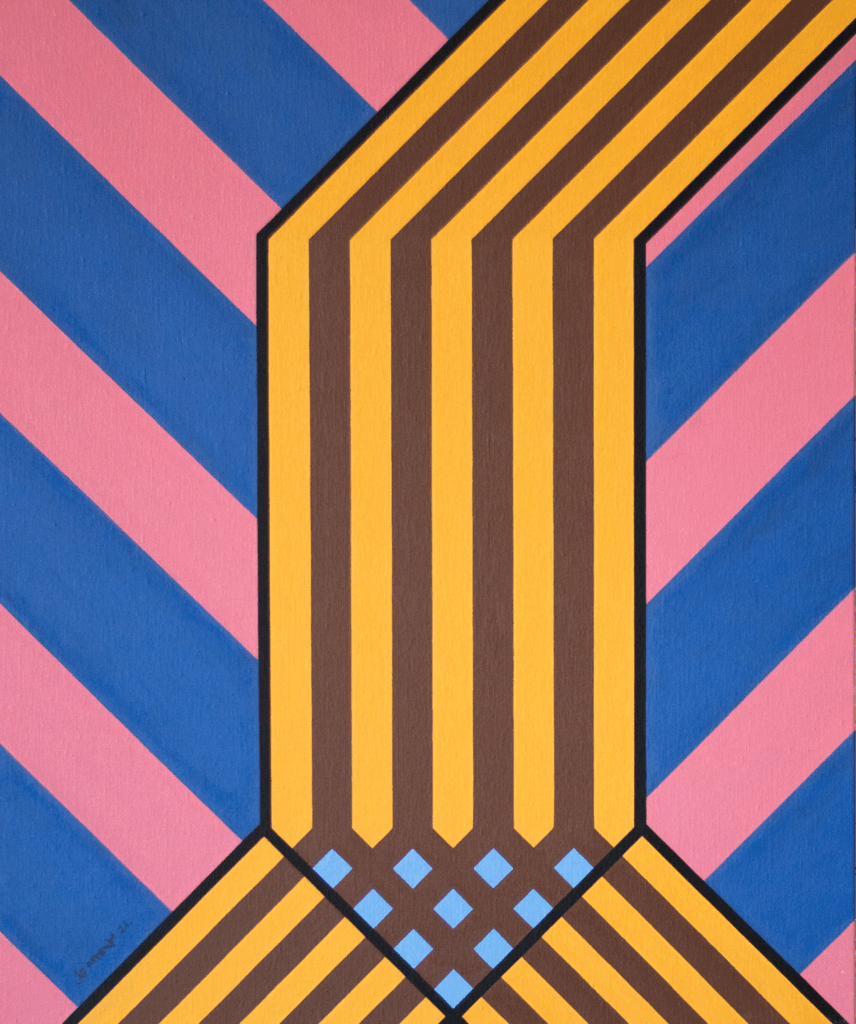
Streams 2021
62 X 50 cm
oil on canvas
This is an interior portrait scene of the entrance hall of my apartment.
Except the space is furnished with objects of war: Land, Sea and Air assets.
The viewer will also see representation of The magnificent 7 (aka “Big Tech”), a detail of Caravaggio’s David and Goliath, seven blank canvasses, and the text “God is Great” in Arabic in the top left hand corner.
The painting is identifying 3 existential threats to our survival: war, AI (and the effects of technology on our human connections), and the Anthropocene (as illustrated by the frog on the pillow).
The number 7 is a lucky number when gambling and it is repeated thrice as objects in the painting. Humanity is going to need luck to achieve a benign outcome with the
cards we presently hold. The 7 blank canvases are representative of the future days to come which are still be painted in and recorded.
The myth of the David and Goliath story where the physically lessor believer slays the Giant non believer is a tale which mirrors our pathological tendency to believe in and entertain fantastical outcomes (as compared to a realistic outcome based on present conditions).
The title “Weird Realism” comes from the explorations of the “weird” and the place it holds in speculative realism- a literary genre which is states that reality can exist independently of human perception…and thus these inanimate objects (of war and technology etc) almost take on a life of their own, making reality increasingly “weird”.